I Do, We Do, You Do: Planning Three Versions of One Hard Task
Here is a pattern many new teachers will recognize. You explain the task, ask if there are questions, hear none, and send students to work. Within two minutes, hands are up across the room. The explanation made sense to you. It did not give students enough to work with on their own.
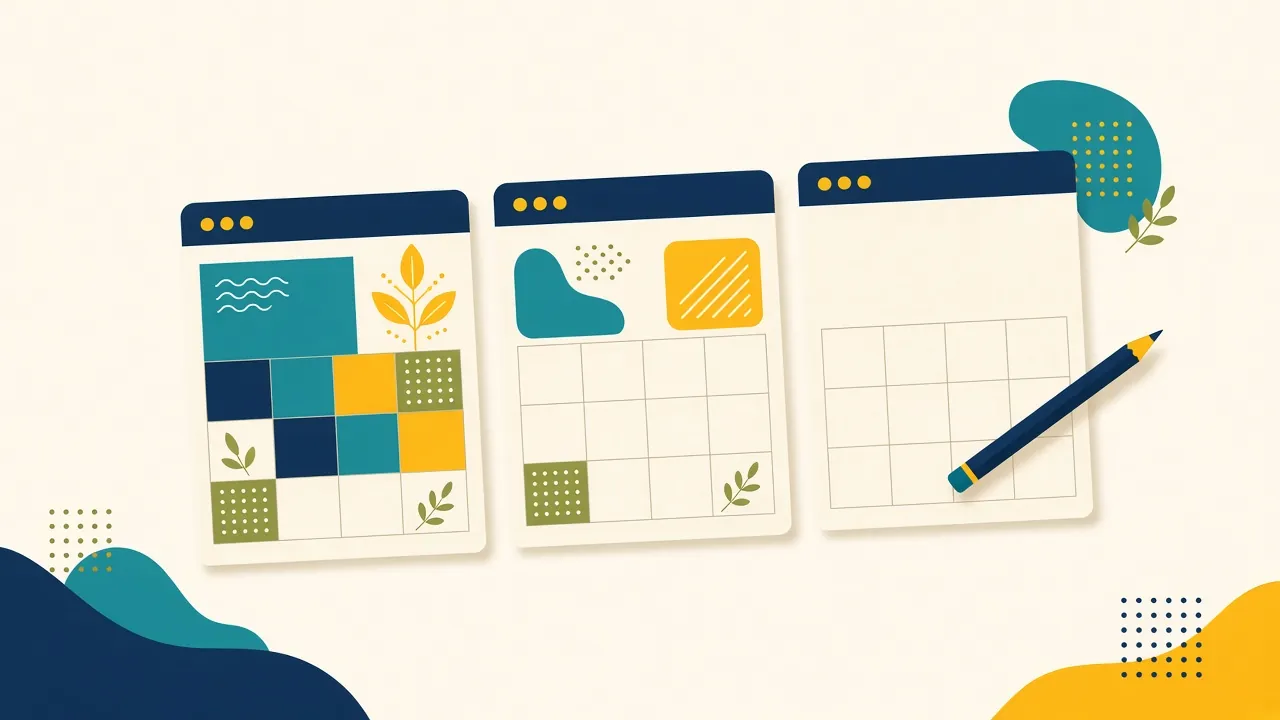
Tip 19 in the book is about practicing I do, we do, and you do with gradual release. Move from modeling to supported practice and independence with a clear sequence. The site's Try this tomorrow move makes it concrete: plan three versions of one complex task. A short model, a similar example students solve with support, and one they complete independently.
Where the idea comes from
The gradual release of responsibility model is usually traced to Pearson and Gallagher's 1983 work on reading comprehension instruction, which built on earlier work by Campione. The teacher starts with most of the responsibility for the task, then shares it with students, then hands it over as students show they can carry it.
It fits a well-established finding from cognitive science. In a series of algebra experiments, students who studied worked examples went on to solve similar problems faster and with fewer errors than students who solved the practice problems on their own (Sweller & Cooper, 1985). As students gain expertise, that heavy support becomes less useful and can even get in the way (Kalyuga et al., 2003). Gradual release is a practical way to manage that shift.
Step 1: Pick one complex task
Choose a task where students regularly get stuck. Writing a claim with evidence, solving a multi-step problem, analyzing a source. One task is enough for this practice.
Step 2: Plan the "I do" as a short model
Work one example in front of students and say your thinking out loud. Keep it short. The goal is for students to see the decisions, not to watch a long lecture. Name two or three things you did that you want them to copy.
Step 3: Plan the "we do" as a similar example
Write a second example that is close to the first, and solve it with the class. Students make the decisions, and you prompt, correct, and confirm. This is a good place for a quick all-student check, so you know who is ready to move on.
Step 4: Plan the "you do" as one more example
Now students try a third example on their own. It should be similar enough that the model still applies, and different enough that they have to think. Watch the first few minutes closely. That is where you see whether the release came too early.
Step 5: Be ready to step back in
Gradual release is not a one-way street. If several students stall on the "you do," pull them back into a short "we do" at a small table while others keep working.
A classroom example
Picture a ninth grade English teacher teaching students to write a claim and support it with one quote.
For "I do," she projects a short passage and writes a claim and a supporting quote while explaining why she chose that quote. For "we do," the class reads a second short passage, and students suggest claims and quotes while she asks, "Does that quote actually prove the claim?" For "you do," students get a third passage and write their own claim and quote on an index card.
Three short passages. One skill. By the time students work alone, they have seen the thinking once and practiced it once.
A question to take to your mentor
Where might students be asked for independence before they have seen and practiced the thinking? Ask a mentor to look at one upcoming lesson with you and find that spot.
Sources
- Pearson, P. D., & Gallagher, M. C. (1983). The instruction of reading comprehension. Contemporary Educational Psychology, 8(3), 317-344. https://doi.org/10.1016/0361-476X(83)90019-X
- Sweller, J., & Cooper, G. A. (1985). The use of worked examples as a substitute for problem solving in learning algebra. Cognition and Instruction, 2(1), 59-89. https://doi.org/10.1207/s1532690xci0201_3
- Kalyuga, S., Ayres, P., Chandler, P., & Sweller, J. (2003). The expertise reversal effect. Educational Psychologist, 38(1), 23-31. https://doi.org/10.1207/S15326985EP3801_4
Site references
- Tip 19: Practicing I Do, We Do, and You Do with Gradual Release
- Book page
- Book: Crush It from the Start: 50 Tips for New Teachers by Dr. Matthew Rhoads, Dr. Samantha Fecich, Dr. Casey Jakubowski, and Dr. Kevin Leichtman (SchoolRubric Inc., 2022)